The Knight Who Built a City on His Own Battlefield
When the Ottomans floated the mutilated bodies of his knights across the harbour, Jean de Valette answered by loading his cannons with the heads of Turkish prisoners. He was nearly seventy, outnumbered many times over, and he refused to budge an inch. Then he founded a capital city that still bears his name.
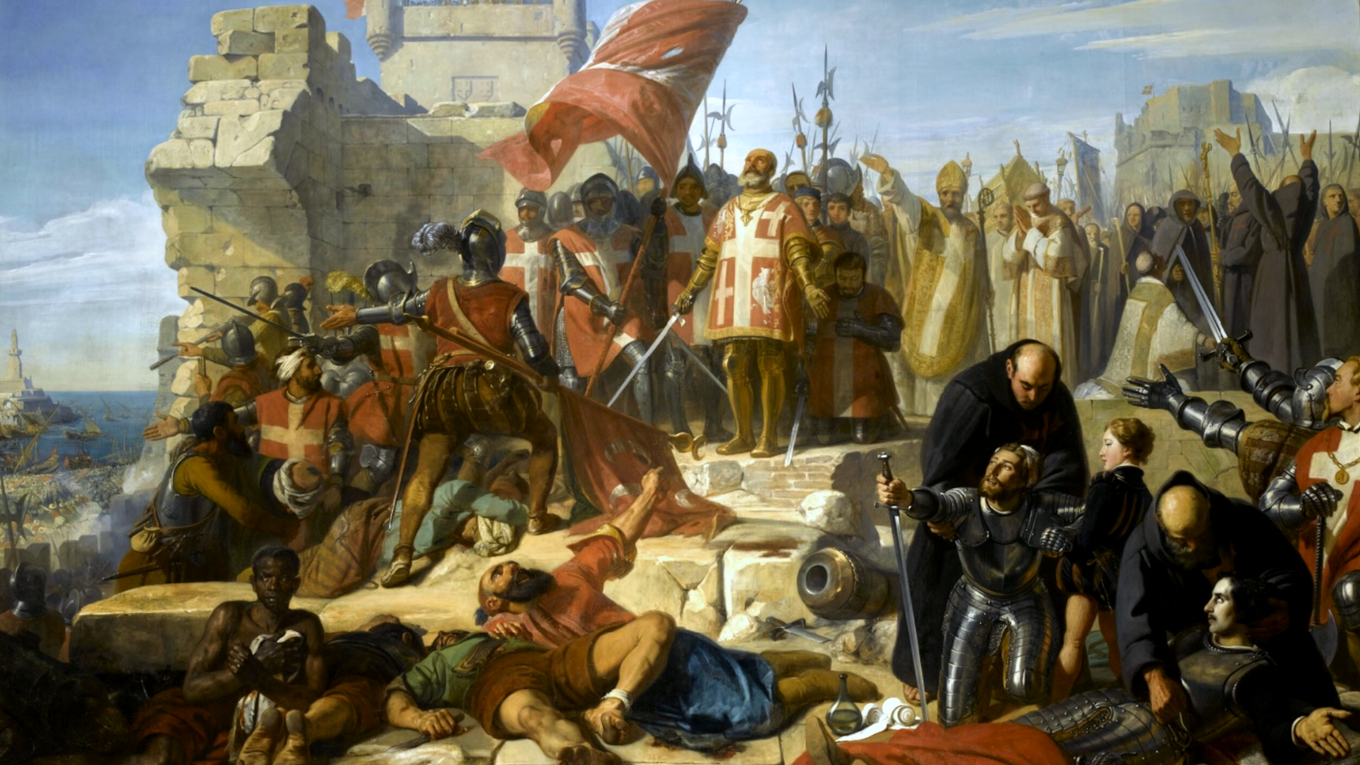

In late June 1565, the defenders of Malta looked out across the Grand Harbour and saw something drifting towards them on the water. It was the bodies of their comrades. The Ottoman army had just stormed the little fort of St Elmo on the far side of the harbour. Now its commander, Mustafa Pasha, had taken the corpses of the knights who had held it, cut crosses into their chests, lashed them to planks and pushed them out into the harbour. The heads of four of the leading knights were set up on poles facing the town.
Watching from the walls was the Grand Master of the Knights Hospitaller, Jean de Valette. The chroniclers say first the old man wept, then he gave an order. Every Turkish prisoner in his hands was to be beheaded, and their heads were to be loaded into his cannons and fired into the enemy camp.
The old soldier
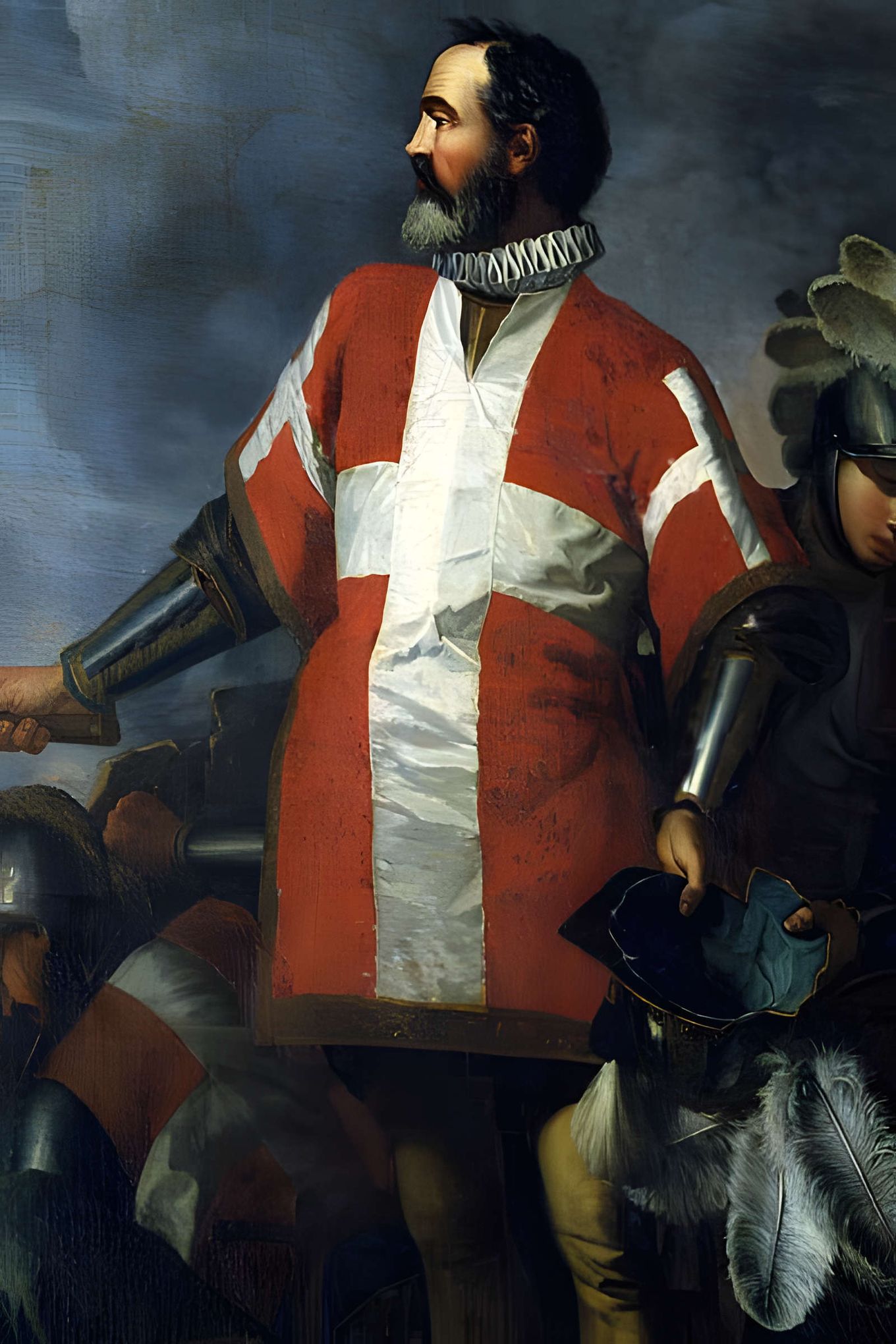

Valette was born around 1495 into a noble family in Quercy, in the south-west of France. At about twenty he joined the Order of St John, the Knights Hospitaller, a brotherhood of warrior monks sworn to poverty, chastity and obedience and to perpetual war against Islam. He never went home again.
He learned his trade the hard way. In 1522 he fought in the six-month siege of Rhodes, when Sultan Suleiman the Magnificent drove the Knights from the island that had been their home. For eight years the Order had no home, until Emperor Charles V gave them the bare, rocky island of Malta in 1530. From there they went back to doing what they did best, which was raiding Muslim shipping. According to modern accounts, Valette paid the price in 1541, when his galley was captured in a sea fight and he spent a year chained to an oar as a slave before being freed in a prisoner exchange.
He rose through every rank of the Order, and in 1557 his brothers elected him Grand Master. He was a stern, devout, utterly inflexible man. By 1565 he was somewhere between sixty-seven and seventy years old.
The Sultan’s armada
Suleiman was now an old man himself, and the Knights had never stopped preying on his ships. In 1564 their most notorious sea captain, Romegas, captured a great merchant ship belonging to the chief eunuch of the Sultan’s household, along with the governors of Cairo and Alexandria. It was the last straw. The Sultan resolved to wipe the Knights off the face of the earth.
The fleet that sailed from Constantinople in the spring of 1565 was one of the largest seen since ancient times: around 190 ships, by the Order’s own historian’s count. Nobody agrees exactly how many soldiers it carried. Contemporary estimates run from 22,000 to 48,000, including thousands of janissaries, the Sultan’s elite infantry. Against them Valette had about 500 knights and some 6,000 soldiers, most of them Spanish and Italian troops and Maltese militia.
His spies in Constantinople had warned him, and he had prepared. He called his knights home from across Europe. He freed 500 galley slaves on the promise of liberty if they fought. He ordered every crop on the island harvested, ripe or not, and he had the wells poisoned with bitter herbs and dead animals. The Grand Master himself laboured on the fortifications alongside his men.
The fort that would not fall
The Ottomans arrived on the 18th of May. Their commanders decided to begin by taking Fort St Elmo, a small fort at the tip of the peninsula that guarded the harbour mouth. Their engineers thought it would fall in a few days.
It held for a month. The Ottoman guns pounded it into rubble within a week, but every night Valette sent boats across the harbour to carry out the wounded and bring in fresh men. He knew that every day St Elmo held was a day gained for the rest of the island, and that the Viceroy of Sicily had said he would send no relief if it fell.
When the garrison’s officers told him the fort could not be held, and the Order’s council agreed, Valette overruled them all. Fifty of the younger knights then sent him a letter saying that if he would not evacuate them, they would charge out and die fighting in the open. His reply was withering. It was not enough for them to die the honourable death they wanted, he said. They would die in the manner he prescribed. They stayed.
On the 23rd of June, the feast day of the Order’s patron St John, the Ottomans finally overran the ruins. Around 1,500 defenders were dead, more than a hundred of them knights. But the little fort had cost the besiegers thousands of their best troops and their most feared commander, the corsair Dragut, who was killed by a stone splinter thrown up by a cannonball. Then came the bodies on the planks, and the heads from the cannons. After that, both sides knew there would be no quarter.
“Deep enough to bury him”
Mustafa Pasha now offered terms. He sent an old Greek slave under a flag of truce to promise the Knights safe passage to Sicily if they surrendered the island. Valette heard him out in silence, then ordered him to be hanged. When the terrified old man begged for his life, Valette relented, as he had probably always meant to. But first the envoy was led past the garrison drawn up in ranks and shown the great ditch around Fort St Angelo. “There is all the room we can afford your master,” one of the officers told him, “but it is deep enough to bury him and his followers.”
So the Ottomans turned their guns on the two fortified towns where the Knights had their headquarters, Birgu and Senglea. For two months they battered them with some sixty-five siege guns. One soldier who lived through it, Francisco Balbi, reckoned that 130,000 cannonballs were fired during the siege. In mid-July the Ottomans tried to storm Senglea from the water with a thousand janissaries in boats. A hidden battery at the foot of Fort St Angelo, built for exactly that purpose, blew the boats apart at point-blank range, and hundreds drowned.
The Grand Master at the breach
The crisis came in August. The walls of Birgu were breached, and Ottoman soldiers poured through the gap and planted their great standard on the ramparts. A priest of the Order ran to find Valette at his post in the town square and begged him to take refuge in the castle while he still could.
Instead the old man snatched up a pike. He had no armour on but his helmet. Calling out, in Balbi’s words, “Let us go and die there, knights, for today is the day,” he ran to the breach and threw himself into the fight. Knights were cut down beside him. A splinter from a grenade tore into his leg. The town’s alarm bell rang, the cry went up that the Grand Master was in danger, and soldiers, townspeople and even the wounded from the hospital came running. Slowly the attackers were forced back.
His knights urged him to withdraw, but Valette, standing among the dead, looked up at the Ottoman flag still flying on the wall and shook his head. He stayed until it was torn down, and that night he slept beside the breach, expecting another attack. When his companions pleaded with him not to risk his life, he answered: “And how can an old man like me end his life more gloriously than when surrounded by his brethren and fighting the battles of the Cross?”
By late August the town was a ruin, and the Order’s council advised him to abandon it and pull everyone back into Fort St Angelo. Valette refused. The castle’s cistern could never supply so many people, he said, and the garrison of Senglea would be left to die. “No, my brethren. Here we must make our stand, and here we must die, if we cannot maintain ourselves against the infidel.” To make his point, he would not even allow the Order’s holy relics and archives to be moved into the castle.
Relief
He had judged his enemy correctly. The Ottoman army was worn down by fighting and disease, and its commanders were quarrelling. On the 7th of September the long-promised relief force from Sicily, about 8,000 Spanish and Italian soldiers, finally landed in the north of the island. After one last battle, the Ottomans took to their ships. By the 13th of September they were gone.
Malta was a wasteland. The Knights had lost about a third of their number, and the island a third of its people. The Ottoman dead were counted, by their enemies, at 25,000 or more.
Europe went wild. The Pope led processions of thanksgiving in Rome. King Philip II of Spain sent Valette a sword and dagger with hilts of gold set with diamonds. The Pope offered him a cardinal’s hat, and Valette turned it down.
A city on the battlefield
Valette’s towns were in ruins and the Ottomans might return. So he decided to build a new fortified capital on the high, rocky peninsula of Mount Sciberras, where so many of the Sultan’s best soldiers had died attacking St Elmo, and from which their guns had bombarded him. Whoever held that ridge commanded both harbours.
Money poured in from the grateful princes of Europe. On the 28th of March 1566, dressed in his robes of state, Valette laid the first stone of the new city, carved with his own coat of arms. It was to be called Valletta, after him. Its official title was Humilissima Civitas Valettae, “the Most Humble City of Valletta.” More than 8,000 men worked on it, and the Pope gave them special permission to keep building on holy days. Valette was there every day. He ate his meals on the building site, held his council meetings there and received foreign ambassadors among the workmen.
He did not live to see it finished. On a hot day in July 1568, while out hawking, his favourite pastime, he was struck down by sunstroke. A fever followed, and on the 21st of August 1568, eleven years to the day after his election as Grand Master, Jean de Valette died. He was the first person to be buried in the city he had founded.
Questions and answers
Did the siege really save Europe?
People at the time thought so. Queen Elizabeth I of England, no friend of Catholic knights, wrote that “if the Turks should prevail against the Isle of Malta, it is uncertain what further peril might follow to the rest of Christendom.” Modern historians are more cautious. Henry Sire, a historian of the Order, argues that the Ottomans were already overstretched and that Spain would quickly have retaken the island. Philip II himself thought that reconquering Malta might be easier than defending it. What the siege did do was break the Ottomans’ reputation for being unbeatable, which helped bring the Christian powers together for their great naval victory at Lepanto six years later.
Is it “Valette” or “La Valette”?
For centuries he was known as Jean de La Valette, and many people still call him that. But in 2012 the Maltese judge and historian Giovanni Bonello pointed out that the Grand Master always signed himself simply “de Valette,” and that every one of the coins and medals struck during his reign uses “Valette” or “Valetta” without the “La.” The extra word may have crept in from the name of his city, which Italians called La Valletta.
Where can you see him today?
In Valletta. His tomb lies in the crypt of St John’s Co-Cathedral, with a Latin epitaph written by his Latin secretary, Sir Oliver Starkey, the last knight of the Order’s English branch at the time of the siege. It calls him “the scourge of Africa and Asia, and the shield of Europe.” A suit of armour said to be his is on display in the Palace Armoury, and since 2012 a bronze statue of him, holding a sword in one hand and the plan of his city in the other, has stood in a square named after him.
Key dates
- c. 1495
- Jean de Valette is born into a noble family in Quercy, in south-western France
- 1522
- As a young knight he fights in the siege of Rhodes, which the Ottomans take from the Order
- 1530
- Emperor Charles V grants Malta to the homeless Knights Hospitaller
- 21 August 1557
- Valette is elected Grand Master of the Order
- 18 May 1565
- The Ottoman fleet arrives off Malta and the Great Siege begins
- 23 June 1565
- Fort St Elmo falls after a month; the bodies of its knights are floated across the harbour, and Valette fires the heads of his prisoners back
- August 1565
- The Ottomans breach the walls of Birgu; Valette, pike in hand, leads the counter-attack and is wounded
- 7–13 September 1565
- A Spanish relief force lands and the Ottomans abandon the siege
- 28 March 1566
- Valette lays the first stone of the new city of Valletta
- 21 August 1568
- Valette dies, eleven years to the day after becoming Grand Master
Further reading
The Great Siege of Malta
Marcus Bull · A new history of the 1565 siege, setting it in its wider economic and political context.
View on Bookshop.org: The Great Siege of Malta
A History of the Knights of Malta
Whitworth Porter · A classic 1858 history of the Order of St John, from its origins through the Great Siege and beyond.
View on Bookshop.org: A History of the Knights of MaltaThis article contains affiliate links. If you buy through them, Yorewire may earn a small commission at no extra cost to you. Affiliate disclosure.
Sources
- 1William H. Prescott, History of the Reign of Philip the Second, King of Spain, vol. 2 (1855), book 4, chapters 2–5 (Classic narrative history built on the eyewitness account of Francisco Balbi di Correggio, a soldier who fought through the siege and published his diary in 1568; source for the quoted speeches and the details of the siege, the founding of Valletta and Valette's death.)
- 2'Great Siege of Malta', Wikipedia (Used for the numbers on each side, which the contemporary sources dispute, and for modern historians' views of the siege's importance. Its date for the arrival of the relief force is a typo and is not followed here.)
- 3'Jean Parisot de Valette', Wikipedia (Used for Valette's early career, the debate over his name, his alleged children and his tomb; drawing on the Maltese historian Giovanni Bonello.)