The Admiral Who Knew Japan Would Lose the War
Few men in Japan's high command knew America as well as Isoroku Yamamoto. He had studied at Harvard, toured its oil fields and factories, and opposed the alliance with Hitler. He warned his prime minister that Japan could win for six months, perhaps a year, and no longer. Then he planned Pearl Harbor anyway, and fought on until American fighters shot him down over the jungle.
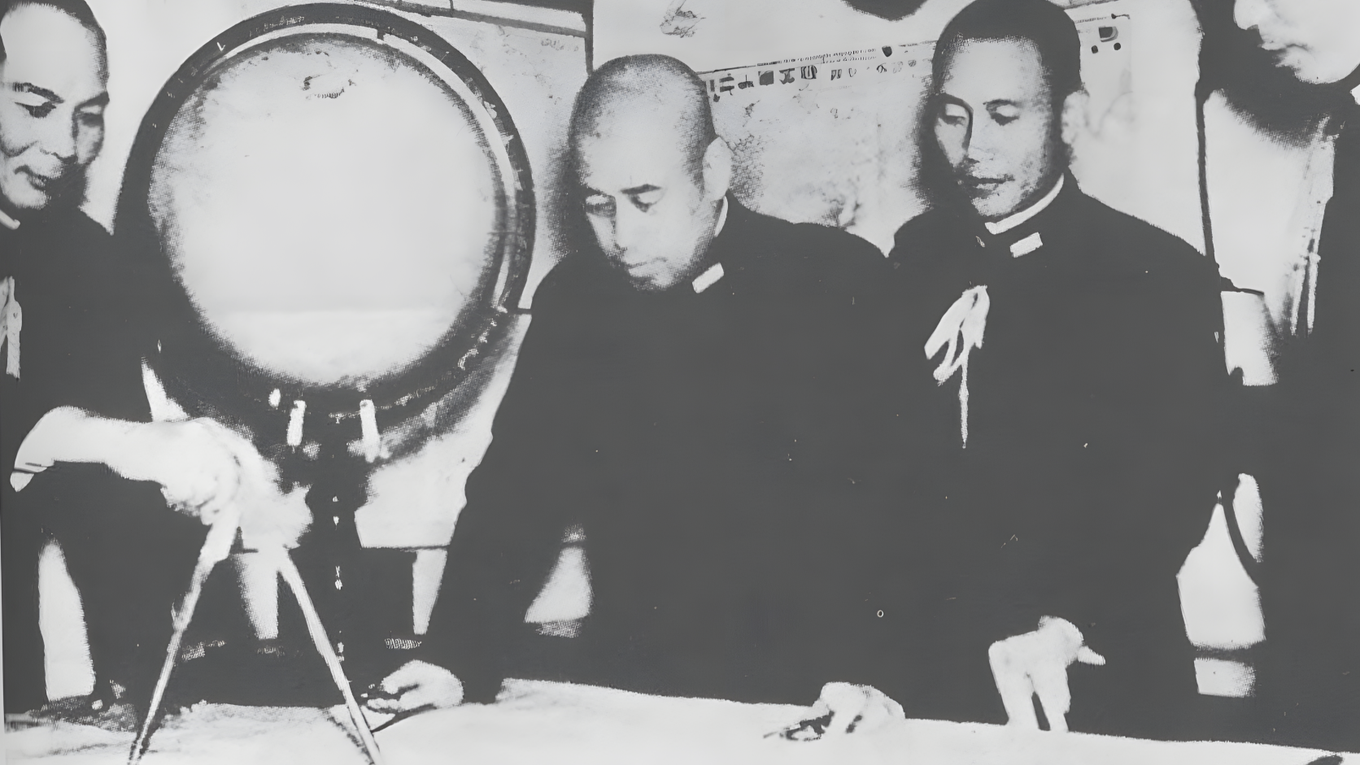

On 11 November 1941, four days after he had ordered the fleet that would attack Pearl Harbor to its secret assembly point in the Kuril Islands, Admiral Isoroku Yamamoto sat down and wrote to an old friend from naval college. The decision for war, he told him, had been made. “What a strange position I find myself in now,” he wrote, “having to make a decision diametrically opposed to my own personal opinion, with no choice but to push full speed in pursuance of that decision. Is that, too, fate?”
Yamamoto did not want the war. He did not think Japan could win it. He planned it anyway, and he died fighting it.
Fifty-Six
He was born in 1884 in Nagaoka, in northern Japan, the son of a samurai named Sadayoshi Takano. His father was 56 years old at the time, and so he named the boy Isoroku: “fifty-six.” In 1916 Isoroku was adopted into another old samurai family that had no sons, the Yamamotos, and took their name.
He went to the naval academy and graduated in 1904, in time for the war against Russia. At the Battle of Tsushima in May 1905, where the Japanese navy annihilated the Russian fleet, a gun exploded aboard his cruiser, the Nisshin. Yamamoto lost the index and middle fingers of his left hand and was badly wounded in the thigh.

The man who knew America
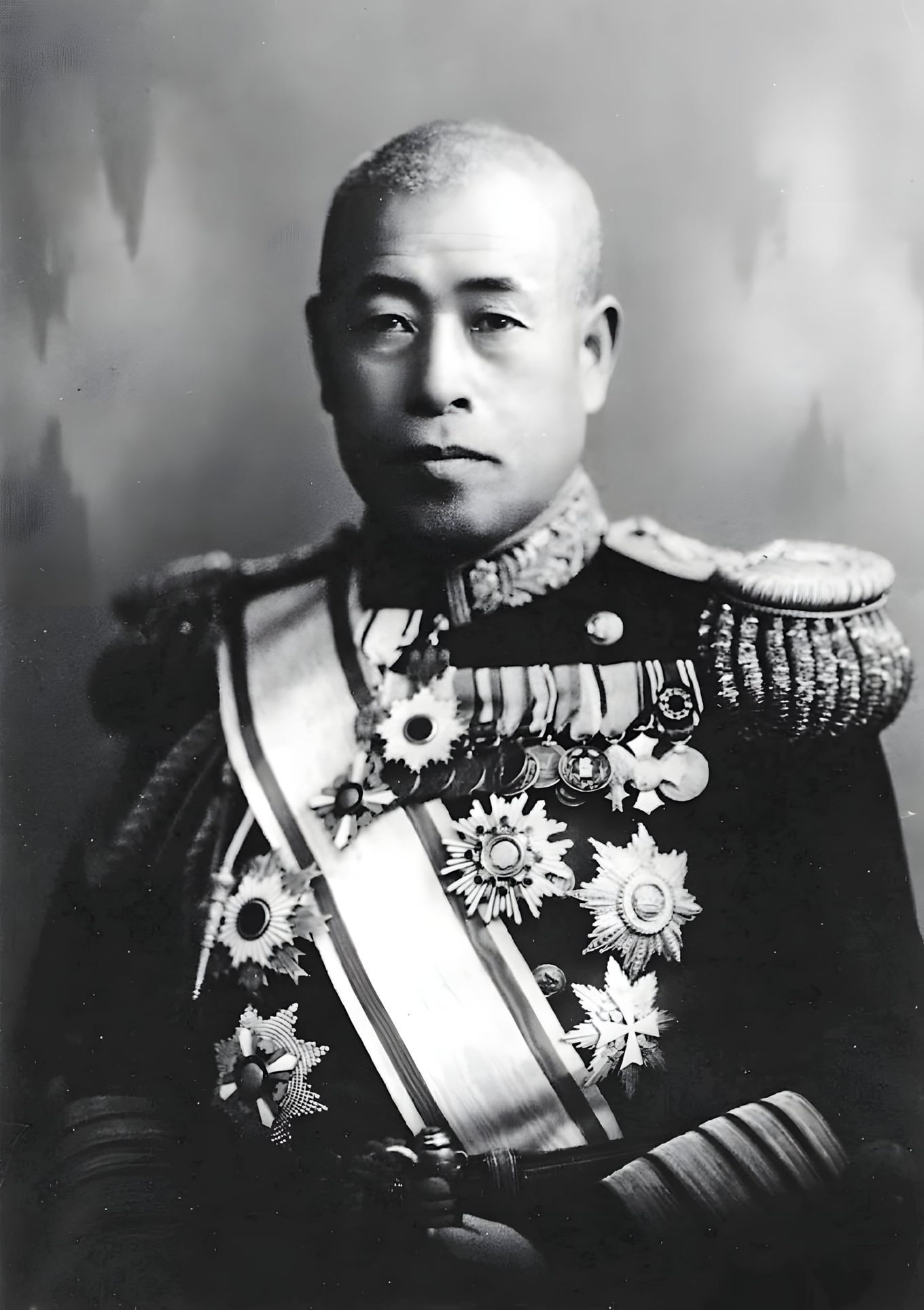
Unlike most of the men who would lead Japan into war, Yamamoto knew the United States well. He studied at Harvard from 1919 to 1921, and he went back to Washington as naval attaché from 1926 to 1928. He learned to speak fluent English and travelled widely. He toured American oil fields and car factories, and he was struck by the sheer scale of American industry. Sugar and salt, which were state monopolies in Japan, were churned out in enormous quantities and sold everywhere. When a companion noticed him heaping sugar into his coffee, Yamamoto joked that he was using up as much of the enemy’s supplies as he could.
He was also a compulsive gambler. He played poker, bridge, shogi, mahjong and anything else that tested his nerve, and liked to joke that he would retire to Monaco and open a casino.
The lesson he took home was simple. Modern war at sea was a matter of oil and industry, and in both, America outmatched Japan many times over.
Opposing the war
In the 1930s, as the army drove Japan into war in China, Yamamoto was one of the navy’s leading moderates. As Vice Minister of the Navy he opposed the war in China. When Japanese aircraft sank the American gunboat Panay on the Yangtze in December 1937, he publicly thanked the United States for accepting Japan’s apologies. Above all, he fought against an alliance with Nazi Germany and Fascist Italy, which he knew would put Japan on a collision course with America.
It made him a target. He received a steady stream of hate mail and death threats from ultranationalists, and the army assigned military police to “guard” him. In August 1939 the Navy Minister sent him to sea as commander-in-chief of the Combined Fleet, partly because he was convinced that if Yamamoto stayed in Tokyo he would be assassinated before the year was out.
Six months, or a year
In September 1940 Japan signed the Tripartite Pact with Germany and Italy anyway. That month the prime minister, Prince Fumimaro Konoe, asked Yamamoto what the navy’s prospects would be in a war with the United States. Konoe recorded the answer in his diary:
If I am told to fight regardless of the consequences, I shall run wild for the first six months or a year. But I have utterly no confidence for the second or third year. The Tripartite Pact has been concluded and nothing can be done about that, but now that it has, I hope you will make every effort to avoid a Japanese-American war.
A few months later, in January 1941, he wrote a letter to Ryōichi Sasakawa, an ultranationalist politician who had just returned from a tour of Japan’s Pacific islands. If war came, Yamamoto warned him, it would not be enough to take Guam and the Philippines, or even Hawaii and San Francisco. “We would have to march into Washington and sign the treaty in the White House. I wonder if our politicians (who speak so lightly of a Japanese-American war) have confidence as to the outcome and are prepared to make the necessary sacrifices?”
It was a warning that the war could not be won. But after Pearl Harbor, the Japanese press published a doctored version, with the last sentence cut, to boost morale at home. American monitors picked it up, and on 29 December 1941 Time magazine printed it: “I am looking forward to dictating peace to the United States in the White House at Washington.” To Americans, Yamamoto became the arrogant mastermind who had boasted he would conquer their country. In 1949 a former US naval officer wrote that Americans had hated no other enemy so bitterly, “not even Hitler.”
The gambler’s plan
If war had to come, Yamamoto believed Japan’s only chance was to strike first and hard. Japan wanted the oil and rubber of the Dutch East Indies and Malaya, and he was sure that seizing them would bring America into the war. So he proposed to cripple the US Pacific Fleet at its base in Hawaii, then win a decisive battle before American industry could rebuild it.
Many senior officers thought the plan reckless. Yamamoto overrode them, at one point threatening to resign if it was not approved. When the chief of staff of the carrier force came to argue against it, Yamamoto told him not to call the plan a gamble just because he liked bridge and poker.
On the morning of 7 December 1941, Japanese aircraft from six carriers attacked Pearl Harbor. They sank or damaged eight battleships and killed more than 2,400 Americans. But the American carriers were at sea and escaped, and the attack did exactly what Yamamoto had feared. It united a divided country behind a war of revenge.
Running wild
For six months, Yamamoto’s prediction came true almost to the letter. Japanese forces swept across the Pacific and Southeast Asia, taking Hong Kong, Malaya, Singapore, the Philippines and the Dutch East Indies. Japanese aircraft sank the British battleship Prince of Wales and battlecruiser Repulse at sea.
The first check came in May 1942 at the Battle of the Coral Sea, where Japanese aircraft sank the American carrier USS Lexington, but the invasion of Port Moresby in New Guinea had to be called off. Then, in June 1942, almost exactly six months after Pearl Harbor, Yamamoto tried to lure the remaining American carriers into a decisive battle at Midway. American code-breakers had read his plans. In a single day, American dive bombers sank all four of the Japanese carriers committed to the attack. Japan never recovered the initiative.
After that came Guadalcanal, a long and bloody campaign of attrition in the Solomon Islands that Japan could not afford. By the start of 1943, the year Yamamoto had given himself had run out. All that was left was a losing fight.
Ambush over Bougainville
In April 1943 Yamamoto decided to visit his front-line bases in the Solomons to raise morale. On 14 April American code-breakers intercepted and decoded a message giving his full itinerary, down to the minute. He would fly from Rabaul to an airfield near Bougainville on the morning of 18 April, exactly a year to the day after American bombers had first raided Tokyo.
The Americans decided to kill him. Sixteen US Army P-38 Lightning fighters took off from Guadalcanal and flew more than 400 miles, skimming low over the sea in radio silence and swinging wide of Japanese-held islands. Yamamoto was famously punctual, and when the P-38s reached Bougainville his flight was exactly where it was supposed to be: two Mitsubishi “Betty” bombers, one carrying Yamamoto and the other his staff, escorted by six Zero fighters. Both bombers were shot down. Yamamoto’s crashed into the jungle.
The body in the jungle
The next day a Japanese army patrol led by Second Lieutenant Hamasuna found the wreck. They had not been told who was on board, and had gone looking for the crashed plane partly in the hope of salvaging cigarettes and food. Hamasuna later said he found the admiral still in his seat, which had been thrown clear of the wreckage, gripping the hilt of his sword, his head bowed as if in thought.
His death was kept secret for more than a month. When it was finally announced on 21 May 1943, American radio monitors reported that the Tokyo announcer’s voice choked as if he were close to tears. Yamamoto’s ashes were carried home aboard his last flagship, the giant battleship Musashi. On 5 June 1943 he was given a state funeral, only the second for a naval officer, and buried at Tama Cemetery in Tokyo next to Admiral Tōgō, the victor of Tsushima.
Questions and answers
Did Yamamoto really say Japan had “awakened a sleeping giant”?
There is no evidence that he did. The famous line, “I fear all we have done is to awaken a sleeping giant and fill him with a terrible resolve,” comes from the 1970 Hollywood film Tora! Tora! Tora! The film’s producer later said the screenwriter had found it in a 1943 letter from Yamamoto, but the screenwriter could never produce the letter, and nobody has found the line in any of his letters, diaries or recorded conversations. It has been quoted as his ever since, and was borrowed again for the films Pearl Harbor (2001) and Midway (2019).
Did anyone survive the ambush?
Yes. The second bomber, carrying Yamamoto’s chief of staff, Vice Admiral Matome Ugaki, crashed into the sea, and Ugaki was one of three men who survived. He went on fighting to the very end. On 15 August 1945, hours after Emperor Hirohito broadcast Japan’s surrender, Ugaki took off from Kyushu with a group of young pilots on a kamikaze mission against the Americans at Okinawa, and never came back.
Could Yamamoto have stopped the war?
Some of his fellow admirals thought he could have done more. Admiral Shigeyoshi Inoue said after the war that Yamamoto’s “six months or a year” answer to Konoe had been a mistake, because it let the indecisive prime minister believe the navy could fight for at least a year. If Yamamoto had said plainly that the navy could not fight, and would lose if it did, Inoue believed, the war might have been avoided.
Key dates
- 4 April 1884
- Isoroku Takano is born in Nagaoka; his name means 'fifty-six', his father's age
- 27 May 1905
- Loses two fingers at the Battle of Tsushima
- 1919–1921
- Studies at Harvard; serves as naval attaché in Washington again from 1926 to 1928
- 30 August 1939
- Sent to sea as commander of the Combined Fleet, partly to protect him from assassins
- September 1940
- Tells Prime Minister Konoe he can 'run wild' for six months to a year, but has no confidence after that
- 7 December 1941
- His carriers attack Pearl Harbor
- 4–7 June 1942
- Japan loses four carriers at the Battle of Midway
- 18 April 1943
- Shot down and killed over Bougainville by American P-38 fighters
- 5 June 1943
- State funeral in Tokyo
Further reading
I Will Run Wild: The Pacific War from Pearl Harbor to Midway
Thomas McKelvey Cleaver · A history of the war's opening phase, from Pearl Harbor to Midway, taking its title from Yamamoto's own prediction to Prince Konoe.
View on Bookshop.org: I Will Run Wild: The Pacific War from Pearl Harbor to Midway
Midway: The Pacific War's Most Famous Battle
Mark Stille · A history of Midway, the battle that ended the six months Yamamoto gave himself.
View on Bookshop.org: Midway: The Pacific War's Most Famous BattleThis article contains affiliate links. If you buy through them, Yorewire may earn a small commission at no extra cost to you. Affiliate disclosure.
Sources
- 1James A. Field Jr., 'Admiral Yamamoto', Proceedings of the US Naval Institute, vol. 75, October 1949 (An early postwar reassessment by a US naval officer, quoting in full Yamamoto's letter to Sasakawa and his letter to Hori of 11 November 1941.)
- 2'Battle of America: Invasion of the U.S.?', Time, 29 December 1941 (How the doctored 'White House' letter reached American readers three weeks after Pearl Harbor.)
- 3Daniel L. Haulman, 'The Man Who Shot Down Yamamoto', Air & Space Forces Magazine, 28 March 2024 (The interception and the decades-long dispute over credit, by a former US Air Force historian who sat on the 1985 review board.)
- 4'山本五十六', Japanese Wikipedia (Used for Konoe's record of the 'run wild' conversation, the poker remark and the Japanese accounts of the crash site and the body, drawing on the official war history Senshi Sōsho and on Ninagawa Chikamasa's book on Yamamoto's death.)
- 5'Isoroku Yamamoto' and 'Isoroku Yamamoto's sleeping giant quote', Wikipedia (Used for his early life and career. The English article dates the 'run wild' remark to mid-1941; Konoe's own record places it in September 1940, and Yamamoto repeated it a year later.)