The Submarine Sunk by the Last Torpedo It Fired
USS Tang sank more ships than any other American submarine of the Second World War. On the night of 24 October 1944, deep inside a Japanese convoy, she fired her 24th and last torpedo of the patrol. It swung round and came straight back. What happened next, in a submarine lying on the seabed in 180 feet of water, is known only from the handful of men who got out.
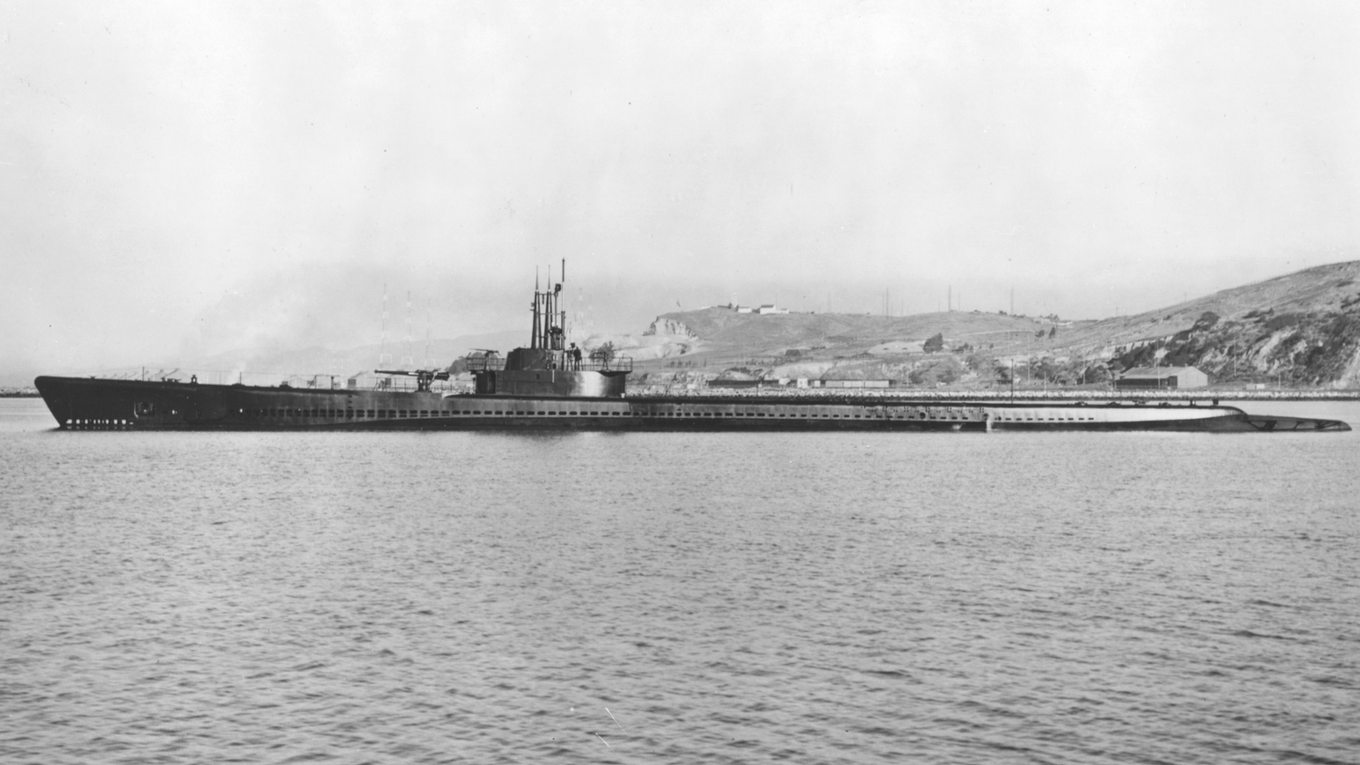

At about half past two in the morning of 25 October 1944, the American submarine USS Tang lay on the surface in the Formosa Strait, between Taiwan and the coast of China, lining up one last shot.
Behind her, the sea was burning. A few hours earlier she had slipped into a big Japanese convoy carrying aircraft and fuel south to the Philippines and torpedoed one ship after another. A tanker loaded with gasoline had gone up in a tremendous explosion. Now only one target was left afloat, a crippled transport lying dead in the water.
Tang had two torpedoes left. Her crew had spent an hour checking them: they pulled them partly out of their tubes, ventilated the batteries, inspected the gyroscopes and made sure the steering gear moved freely. The 23rd torpedo was fired at the transport and ran “hot, straight and normal,” its phosphorescent wake heading true for the target.
Then the captain, Commander Richard O’Kane, fired the 24th.
The deadliest American submarine
Tang was barely a year old. She had been completed at Mare Island in California in October 1943, and in five patrols she had become the most feared American submarine in the Pacific. Japan, an island nation, depended on ships to bring in oil, rubber, iron and food and to supply its armies, and American submarines were strangling it.
O’Kane had learned his trade as second-in-command of USS Wahoo under the aggressive Dudley “Mush” Morton, and he fought the same way: on the surface, at night, at close range. On her third patrol Tang sank ten ships in a single cruise, a record for an American submarine. On her second she sank nothing, but rescued 22 American airmen shot down during carrier raids on the Japanese base at Truk, some of them picked up under fire from shore batteries.
Postwar research in Japanese records credits her with 33 ships, more than any other American submarine.
The circle
The last torpedo was an electric Mark 18. As soon as it left the tube it veered to the left, broke the surface, and began to curve round in a tight circle, porpoising as it went. In the dark the men on the bridge could follow its glowing wake as it swung round towards them.
O’Kane ordered emergency speed and tried to swing the boat clear of the circle. It made things worse. About twenty seconds after it was fired, the torpedo struck Tang on the port side aft, near the after torpedo room. Its warhead held the equivalent of about 850 pounds of TNT.
Tang’s stern was torn open. The three rear compartments flooded at once, and nobody in them survived. The shock flung men across the control room and broke their limbs. Within seconds the stern dropped to the bottom, 180 feet down, leaving the bow sticking out of the water at a steep angle.
Nine men were on the bridge. Three, including O’Kane, were washed into the sea and kept themselves afloat for about eight hours. The rest went down with the boat. One officer trapped in the flooding conning tower managed to escape and reach the surface.
Forty-five men on the bottom
Inside, about 45 men were still alive. They sealed the damaged compartments, and the men in the control room deliberately flooded the forward ballast tanks so that the bow settled on the seabed, level, to make it easier to escape. While some burned the secret codebooks, the survivors made their way forward to the forward torpedo room, which had an escape hatch. They carried the injured in blankets.
Each man was given a Momsen lung, a rubber bag of oxygen worn on the chest that let a man breathe as he rose to the surface. Over half of them, the Navy found later, barely knew how to use one.
Before they could start, Japanese escorts arrived and dropped depth charges. For hours the men waited in silence. Then a fire broke out in the battery compartment next to them. When a party opened the door to try to get to the controls, thick black smoke poured into the torpedo room, filling it so densely that the lights were barely visible. After that, there was no going back.
The escape trunk
Just after dawn, the first party of four climbed into the escape trunk, a small chamber above the torpedo room that could be flooded so that men could step out into the sea. It went wrong at once. The men argued about how the trunk worked and struggled to rig the line to the surface. The officer leading them left before it was ready and was never seen again. After forty minutes with no signal, the men below assumed the worst, closed the hatch and drained the trunk, with the other three still inside.
The second party did no better. Of the three who left the trunk, one reached the surface alive. When the trunk was drained, the two officers left inside were found half-conscious, tangled in the line.
By now, said one survivor, “the constantly increasing pressure, smoke, and heat seemed to affect everyone’s thinking.” Many of the men no longer cared whether they got out. On the third attempt, only one man of four would go. Feeling himself about to pass out, he simply stepped out of the trunk clutching a lifebuoy and shot towards the surface, venting air from his mouth as he went. He lived. He had practised a 100-foot escape in training before the war, and said afterwards: “I felt at ease using the lung and knew it would work.”
Three more men from a fourth party reached the surface alive. By the time they had left, the fire next door was so hot that the paint on the torpedo room bulkhead was melting and running down the wall. Three men from a fifth attempt reached the surface but died soon afterwards.
Thirteen men left Tang through the escape trunk. Eight reached the surface alive, and five survived. About thirty men were still in the torpedo room. The Navy concluded that the smoke and the build-up of carbon dioxide must have killed them within a few hours.
Prisoners
Later that morning a Japanese escort ship picked up the nine survivors: O’Kane, two others from the bridge, the officer from the conning tower, and the five from the escape trunk. Seventy-eight men had died. Floating a thousand yards away, the survivors could see the bow of the transport they had sunk, sticking straight up out of the water.
On board the Japanese ship were survivors of Tang’s earlier victims, and they beat the Americans. “When we realized that our clubbing and kickings were being administered by the burned, mutilated survivors of our handiwork,” O’Kane wrote, “we found we could take it with less prejudice.”
The nine were taken to Ōfuna, a secret interrogation camp near Yokohama, where the Japanese held prisoners they did not report to the Red Cross. All nine survived the war. When O’Kane was freed in 1945, he wrote up Tang’s last patrol from memory, and the following year President Truman presented him with the Medal of Honor.
Questions and answers
Did Tang sink ships carrying Allied prisoners?
Yes. On 24 June 1944, off Nagasaki, Tang torpedoed the Japanese transport Tamahoko Maru, which sank in under two minutes. Nobody on the submarine knew that she was carrying 772 Allied prisoners of war, British, Australian, American and Dutch, being shipped to Japan as slave labour. About 560 of them died. It was not a rare tragedy. Japanese “hell ships” were unmarked, and thousands of Allied prisoners were killed by American submarines and aircraft that had no way of knowing who was on board.
Was Tang the only submarine sunk by its own torpedo?
Probably not. The Navy’s 1949 report suspected that USS Tullibee, lost off Palau in March 1944, had been sunk the same way. Her only survivor, a gunner’s mate who was on the bridge, said she was rocked by a huge explosion moments after firing at a Japanese convoy, and was thrown into the sea. Circular runs were a known danger, and by the time the report was written the Navy was developing a device to stop torpedoes running in circles. Two years before Tang, the British cruiser HMS Trinidad had been crippled by her own torpedo in the Arctic.
Why did Japan rely so heavily on convoys?
Because it had no choice. Japan imported almost all its oil and much of its food, iron ore and rubber, and its armies were scattered across thousands of miles of ocean. Its admirals had planned for a short war; Admiral Yamamoto had warned that Japan could not win a long one against American industry. American submarines, a small fraction of the US Navy, sank more than half of all Japanese merchant shipping lost in the war, and by 1945 the Japanese home islands were close to starvation.
Key dates
- 15 October 1943
- USS Tang is commissioned at Mare Island under Lieutenant Commander Richard O'Kane
- April–May 1944
- On lifeguard duty off Truk, Tang rescues 22 downed American airmen
- 24 June 1944
- Tang sinks the Tamahoko Maru, which is carrying 772 Allied prisoners of war
- 24 September 1944
- Tang leaves Pearl Harbor on her fifth war patrol
- 23 October 1944
- Tang attacks a convoy in the Formosa Strait
- 25 October 1944, about 2.30 am
- Tang's last torpedo makes a circular run and sinks her
- 25 October 1944, morning
- Nine survivors are picked up by a Japanese escort ship
- 27 March 1946
- O'Kane receives the Medal of Honor
Further reading
Thunder Below! The USS Barb Revolutionizes Submarine Warfare in World War II
Eugene B. Fluckey · A fellow submarine skipper's own wartime memoir, capturing the same aggressive, close-range style of submarine warfare that made Tang so deadly.
View on Bookshop.org: Thunder Below! The USS Barb Revolutionizes Submarine Warfare in World War IIThis article contains affiliate links. If you buy through them, Yorewire may earn a small commission at no extra cost to you. Affiliate disclosure.
Sources
- 1US Navy Bureau of Ships, Submarine Report: Depth Charge, Bomb, Mine, Torpedo and Gunfire Damage Including Losses in Action, War Damage Report No. 58 (1949), section X, via the Naval History and Heritage Command (The Navy's technical reconstruction of the sinking, based on O'Kane's report, written from memory after his release, and interviews with the survivors.)
- 2Richard H. O'Kane, Clear the Bridge! The War Patrols of the U.S.S. Tang (Rand McNally, 1977), via the Internet Archive (The captain's own account, used via the Wikipedia article that quotes it.)
- 3'USS Tang (SS-306)', Wikipedia (Used for Tang's earlier patrols and her record.)